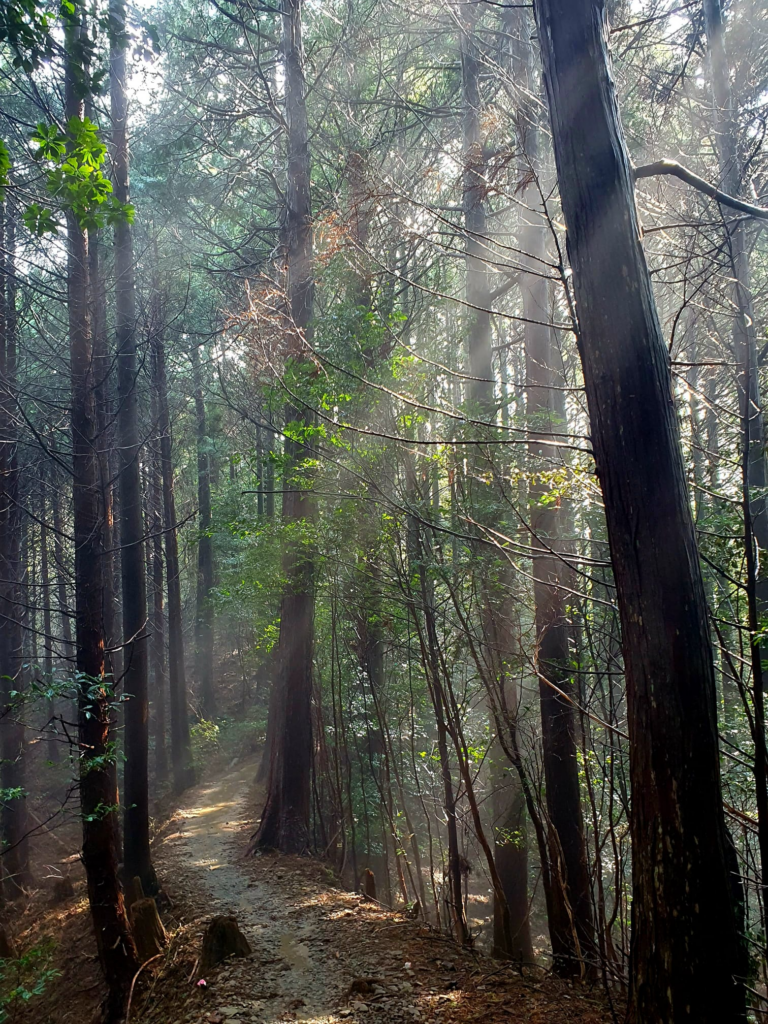
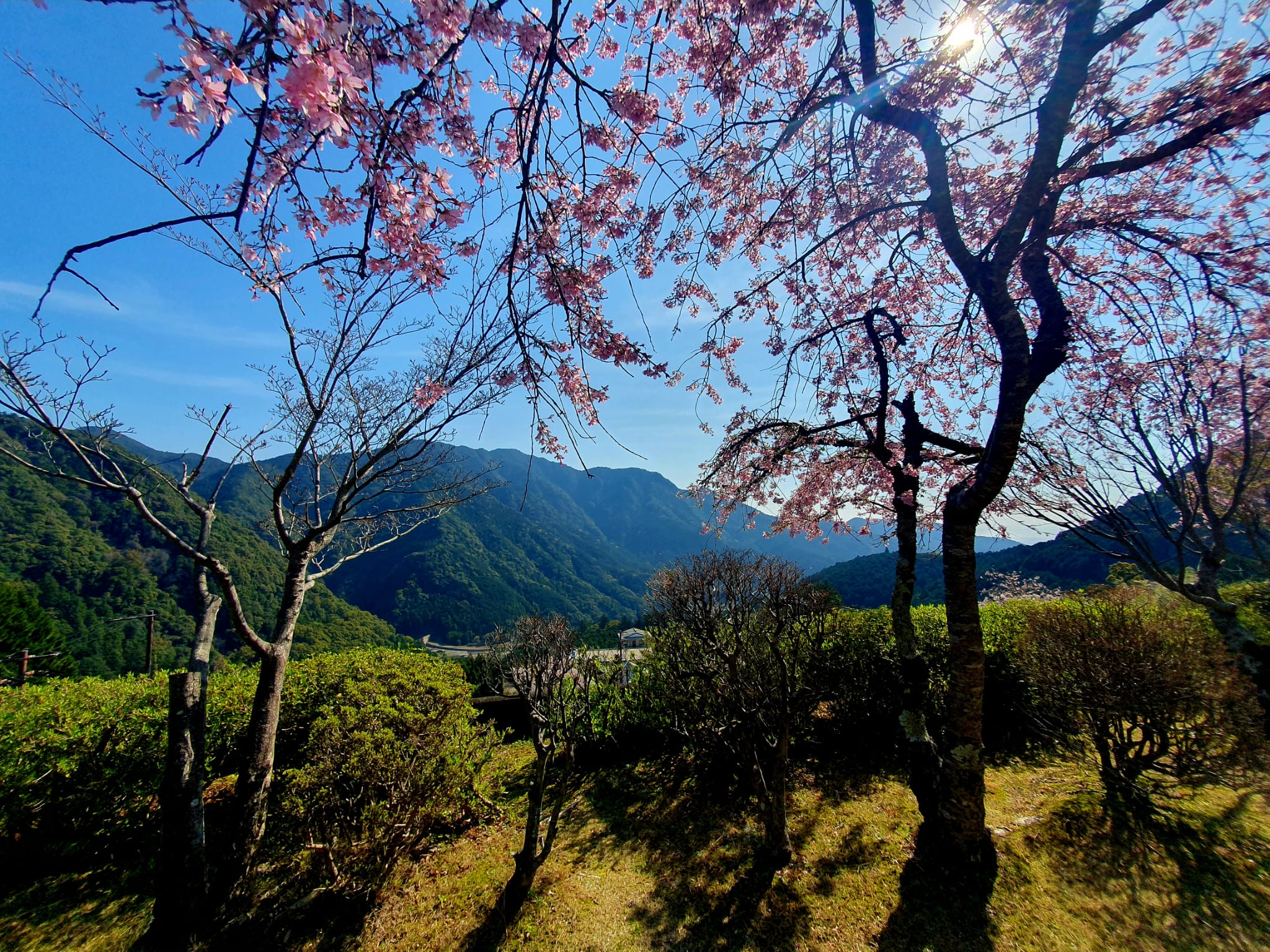
Spending the past two weeks in Japan, walking 150 km through cities, villages, mountains and forests in the Sakura season, brought reflections on the nuances of walking, experiencing and building paths.
Walking along the Kumano Kodo – a Japanese pilgrimage trail built over a 1000 years ago – reminded me of how much we are shaped by the paths others have built and walked before us, as well as can shape the paths we walk and create for others.
Building the paths
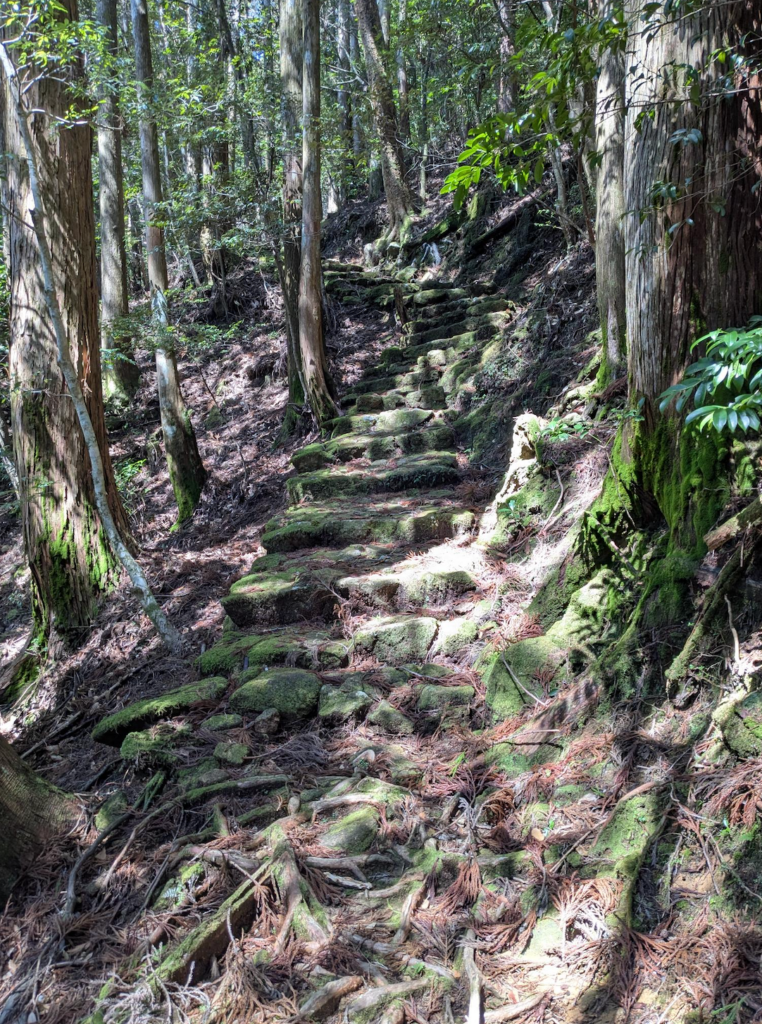
There is something quite perspective-shifting in walking a route that was built over a thousand years ago, with many generations of humans having gone through the same path as pilgrims. Those who have built the path before us have shaped a path which is now shaping us somehow.
That although carrying our own loads – mental and physical – along the way may sometimes feel uncomfortable, it is likely nothing compared to the scale of struggle that was endured in building the initial path. Or maybe not? Maybe the path builders found meaning and solace in the potential legacy of their labour or in the joy that comes from getting one’s hands dirty in the soil. Maybe they were able to tell their loved ones what they were contributing to or maybe their community of builders became their family.
As I walked the Kumano Kodo, I tried to imagine how they may have been building the path back then and how much it would differ from how it would be built today. What it could mean for those experiencing it today. How much the path would have changed over the centuries and how that may have impacted those who walked it. It made me think about how much of us is left in the paths we build or walk. And about how much we become the paths we are walking or not…
Walking the paths
The truth is, unless you have done extreme amounts of preparatory research into the trail you are hiking, there is more often than not a large component of the path that will remain unknown by you until you walk it. Part of the exploratory game is being confident enough that you are equipped for what will come – when you do not know what the path will bring.
Yes, in case it isn’t completely obvious yet, when I say path(s) I am not only referring to hiking trails but also more broadly to projects we lead or are a part of, whether professionally or personally.
So, let’s say that most of the time, when we are on a multi-day trail, we tend to be walking from A to B – not knowing what the journey or B will look like exactly. We might have maps or trail markers – or even sometimes human guides – guiding us along the way. In order to get to C further down the track, it helps when we can follow a pathway from A to B. Even though we know the path is far from linear.
There are instances when the journey, for a range of reasons, might feel more like walking from A to A – whether that is intentional or not. Depending on our openness or state of mind, we might decide that the loop is part of the fun, or that we are going around in a circle, or that the shape is more akin to that of a spiral because although it may seem that we are back to the starting point, we have ourselves transformed along the way.
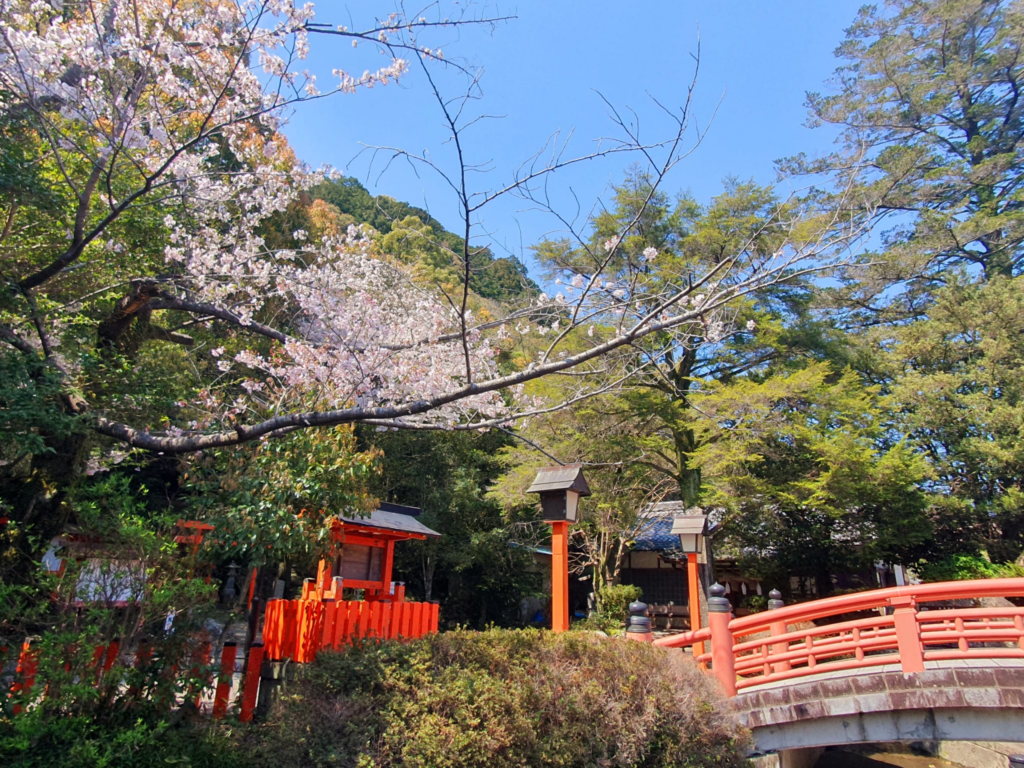
And then sometimes, we may feel that while climbing up the 538 steps to the umpteenth shrine with our hiking backpack would certainly be doable, coming back down the same rocky steps to find ourselves in the same spot would not be the kindest – and also a completely unnecessary – option. Sometimes, resting in A is the most generous gift we can give to ourselves and others. It doesn’t mean that others shouldn’t climb up to that shrine, on the contrary, it may be of great benefit to them. So we create space for others to walk up while we stay on the ground. This is where our body and mind may relax for lines of poetry to reveal themselves. When we might get to listen to the gentle wild bird that will not be rushed, the free spirit that comes when the time feels right and will say what needs to be heard, when the time comes.
The sun caressing your skin
The thunder of the running water
The shadow of the leaves flickering on the ground
A moment of blissful solitude
Where nothing else matters but the here and now
Experiencing the paths
In walking, I realised that :
- There is no obvious correlation between how well travelled a route is and what it will bring – whether joy, fear, calm or sense of unrest.
- There is a strong relationship between our mind-shape and body-shape, and our path-shape, and conversely.
Yes, there is certainly a dialogue between ourselves and the path; which influences how we experience the path. Funnily enough, all our senses might not agree either or share the same experience.
Our sight might be blessed by the colourful cherry blossoms, while our nose be badly tickled by a whiff of sewage.
In some cases, all of our senses will agree that the path is full of discomfort – our sense of balance ready to be pulled into the void while the powerful cascading sounds of water falling may overwhelm our ability to see clearly and place one foot in front of the other.
Some paths might appear innocuously average, yet allow an unfamiliar yet somehow familiar state of rare contentedness.
Rainy days might turn our path into a rocky river, hence plunging us into a state of deep concentration that only allows for this step and the next to exist. The water trickling through the rocks, the steps climbing and descending, the accompanying Japanese bush warbler cheer-leading us along our journey through the thick forest. The petrichor ever so present : a gift of now.
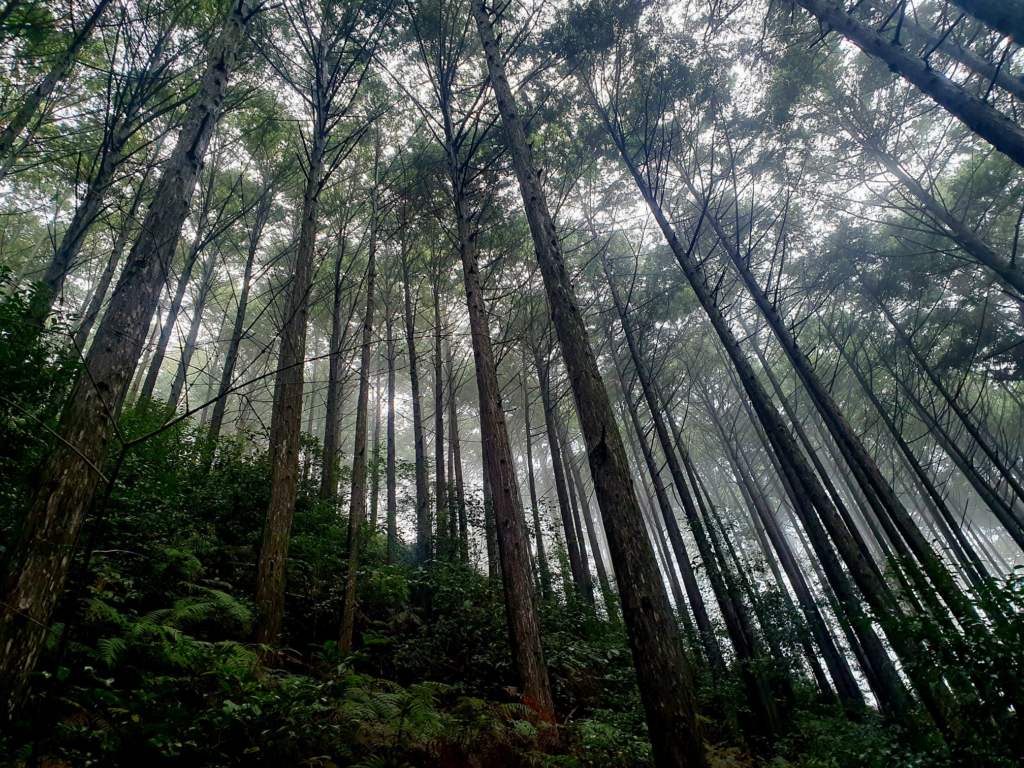
A visitor becoming the path
In walking for kilometres on end, one step in front of the other, the ever changing path changes before our eyes. Pain exists and emerges at different levels of intensity in the body, in the mind. Ambient soundscapes welcome every step, and with a song, transform our state of being. A worried bird call might warn of the presence of a suspicious visitor. Noticing the disturbance in the soundscape might spike our sense of awareness, although we might not be able to tell yet whether we are the visitor in question or whether it is time to carefully look out for snakes on the root-rich path…
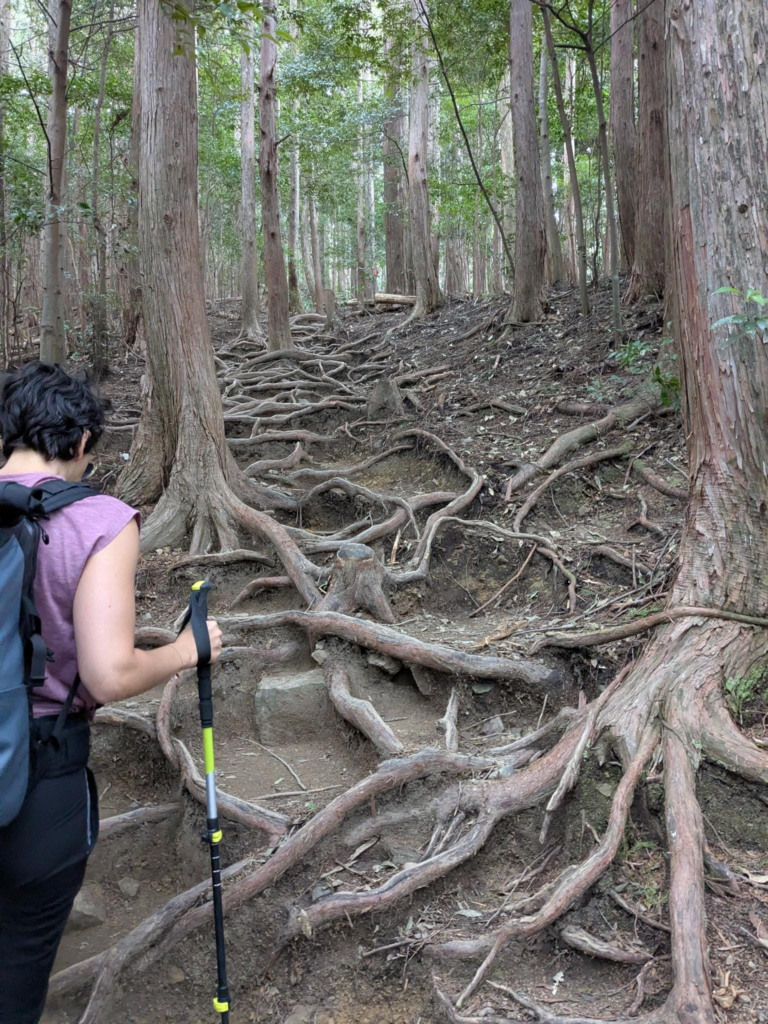
Regardless, although we know that we are a visitor on this path and country, we can also tell that our response has become part of the path itself, and no longer can we point to the edge between us and the path we are walking.
A state of flow
An ephemerically ungraspable
Essence of presence
We are collectively building the paths in walking, shaping and becoming the paths. When we are not in the right shape for a given path, it may be time for us to rest, observe the komorebi and allow space for others to step in.
Now, all we can do is walk one step in front of the other and lead with yorokobi (joy).