
Something beautiful is unfolding… That was the strong gut feeling I sensed as I was enjoying reading Robin Wall Kimmerer’s Braiding Sweetgrass. What a treat this book is. An incredibly rich coming together of ideas, words and stories giving texture and grounding to concepts that often live separate lives. Indigenous wisdom, scientific knowledge and the teaching of plants. As if it rekindled a little fire in me, bringing to life something that I imagine is akin to the sort of assistance Tyson Yunkaporta refers to in sand talk. ‘The assistance [that] comes from sharing patterns of knowledge and ways of thinking that will help trigger the ancestral knowledge hidden inside. The assistance people need is not in learning about Aboriginal Knowledge but in remembering their own.’
To me, these two books gave language to the reciprocal nature of responsibility and gift, and helped me remember and imagine kinder alternatives where cross-pollination of knowledges could be in service of life. By sharing these gentle words, I hope something beautiful can unfold in you too.
The edge of understanding
Scientific knowledge and search for understanding can be awe-some. Sadly, there often comes a time when work-life wears away the inquisitive mind gift that motivated researchers to get into the well-meaning quest of understanding in the first place. Some of us lose our awe. The scientific method comes with a high degree of rigour and tendency to break things down in order to better understand them which results in a form of fragmentation of reality. This way of thinking, when left and right brains are not working together, or when we are taught to forget to tap into what our intuition tells us, comes at a cost. What we know in our heart and body, beyond words. Our analytical selves pay a certain ‘price’ in trying to understand when in the process we forget that reality and life are much more beautiful and awe-some.
Brene Brown’s Atlas of the Heart speaks of awe being at the frontier of understanding and not understanding. According to Ulrich Weger and Johannes Wagemann, ‘Wonder inspires the wish to understand; awe inspires the wish to let shine, to acknowledge and unite.’
I am curious about the ways in which awe and understanding could both be in service to life.

Cross-pollinating knowledges
The Western scientific worldview has artificially created a separation between science and art, also somewhat separating knowledge from responsibility. Kimmerer refers to science as the ‘process of revealing the world through rational enquiry’, yet sees caring coming from someplace else. She questions: ‘For what good is knowing, unless it is coupled with caring’. In her clever and beautiful Asters and goldenrod chapter, she alludes to the scientific and artistic poetries of the purple and yellow flowers, a reciprocal pair beneficial for each other and a beacon for bees in the meadow. The colours, diametrically opposed to each other, evoke each other in our eyes and that of the bees who cross-pollinate, drinking the flowers’ nectar and gathering their pollen. She asks: ‘Might science and traditional knowledge be purple and yellow to another, might they be goldenrod and asters? We see the world more fully when we use both.’
What an inspiration. A perfect living example of cross-pollination that can produce a new, more beautiful species of knowledge.
I am curious about the ways in which we could bring this cross-pollination metaphor to life and practice a respectful learning and adaptation of knowledges.

Gift and responsibility
In Braiding Sweetgrass, Kimmerer shares many stories including about the making of maple syrup, the growing of sweetgrass, the planting of the ‘Three Sisters’, etc. Through these stories, she reminds us that the earth endows us with great gifts and that we have a responsibility to participate in the plants’ transformation and give our gratitude; perpetuating the cycle of reciprocity. Like for example in the growing and harvesting of food in ways that govern the exchange of life for life, according to indigenous principles of ‘Honourable Harvest’. In planting a garden in reciprocity, she says: ‘we fill our spirits as well as our bellies’.
These principles and practices of relationality and reciprocity are omnipresent in Tyson Yunkaporta’s sand talk. They are woven in Mumma Doris’ story, generously shared by Yunkaporta, where she refers to protocols connecting spirit, heart, head and hands as respect, connect, reflect and direct. Starting with respect (spirit) to align with values and protocols of introduction, connect (heart) to establish ways of being in relationship, to reflect (head) to collectively think and share knowledge, and finally direct (hands) to act on that shared knowledge.
There is such richness, nuances and care in such ways of being, thinking and doing, that go far beyond what fast-pace living economies generally allow for. These are gentle reminders that ancient cultures have found relational maturity over tens of thousands of years, and that it is our collective responsibility-gift to learn with.
I am curious about both the power of narratives and embodying what this means in practice. Learning by being, feeling, thinking and doing, to illuminate both responsibility and gift.

Revitalising our own ways
Reading these books, I was reminded that relationships, narratives and metaphors carry meaning. That ways of being, appreciating and holistically understanding the world and its patterns through observation and activity matter. There are many ways to enter reciprocity through science, art, everyday acts of awe and practical gratitude. That, as humans are part of nature, we have responsibility and gifts. That we lose ourselves when we disconnect. That, as Kimmerer says: ‘We need acts of restoration, not only for polluted waters and degraded land, but also for our relationship to the world’. Acts of restoration between plants and people. That restoring this mutual relationship of respect, responsibility and love is likely our most challenging yet most rewarding work. That we also have an opportunity to tap into the most magical part of being human to create something beautiful in response. What else can we give the earth but something of ourself when the earth has everything?

Source: Gift of light captured by Yasmina Dkhissi
I am curious about the multitude of ways in which we can promote collective acts of restoration that nurture our mutual relationship with life. The acts that broaden our appreciation of knowledge and find inspiration in the eloquent language with no words; listening to the teachers who ‘wordlessly in leaf and vine embody the knowledge of relationship’.
Reading these books, finding myself more alive in the process and metabolising what I was learning and remembering, reminded me of Howard Thurman’s famous quote:
“Don’t ask what the world needs. Ask what makes you come alive, and go do it. Because what the world needs is people who have come alive.”
I wholeheartedly hope this brings you life.
Bringing this to life in practice
Across these themes, here are some of the humble practices that I have been experimenting with over the years, both at personal and collective levels, which are very much alive for me today.
| Theme | Personal | Collective |
| The edge of understanding – cultivating awe and wonder | – Spending slow time in nature, acknowledging trees, flowers, birds and river – Having a regular delight practice to remember the miracle of life – Regulating nervous systems through range of practices (meditating, yoga, walking, morning pages, singing) – Reading, listening and learning with indigenous knowledges, black feminism, and eastern traditions | – Finding inspiration in nature and writing about it (inspired by nature, inner-nature, lichens, etc.) – Fostering connection with nature in the adaptive futures framing – Injecting joy into climate humans’ lives through the delight project / movement – Encouraging work-time spent with partners by the river |
| Cross-pollinating knowledges – weaving together science and art | – Creating tree bark and other mosaics – Reconciling the artist and scientist parts in me – Leaning into openhearted curiosity rather than control – Practicing the muscle of knowing when I don’t know and when I know in different ways – Balancing learning and unlearning | – Cultivating narratives that seek beauty and weave scientist and artist parts together, e.g. metacrisis turned into a mosaics of life piece, move like water and playing with metaphors, poetry and imagery – Watering seeds of relational partnerships where multiplicity of understanding is honoured |
| Gift and responsibility – learning by being, feeling, thinking and doing | – Shifting my own perspective and finding balance: remembering the gift side beyond pure responsibility – Finding moments of integration – Practicing rest as resistance | – Weaving the language of gift-responsibility in work approaches and conversations – Intentionally connecting heads, hearts and hands in the framing of the how in work interventions |
| Revitalising our own ways – nurturing what is life-giving | – Cultivating flow state through writing and painting – Developing an inner compass for what is life-giving – Finding moments of presence and embodiment | – Collective acts of restoration such as planting trees as a team – Sharing the practice of interrogating what is life-giving as a compass for decision making – Encouraging diversity and others’ journeys to find what is life-giving for them |
Where to next?
I don’t know.
I don’t know but I am curious.
I trust that the gift of reciprocity, where the real magic happens, can unfurl something beautiful.
I want to carry on exploring ways that nurture mutual relationships with life.
I want to learn how we collectively weave ways of being, feeling, thinking and doing into life-giving practices.
If any of this resonates with you, let’s have a conversation, imagine what’s possible and learn by doing.
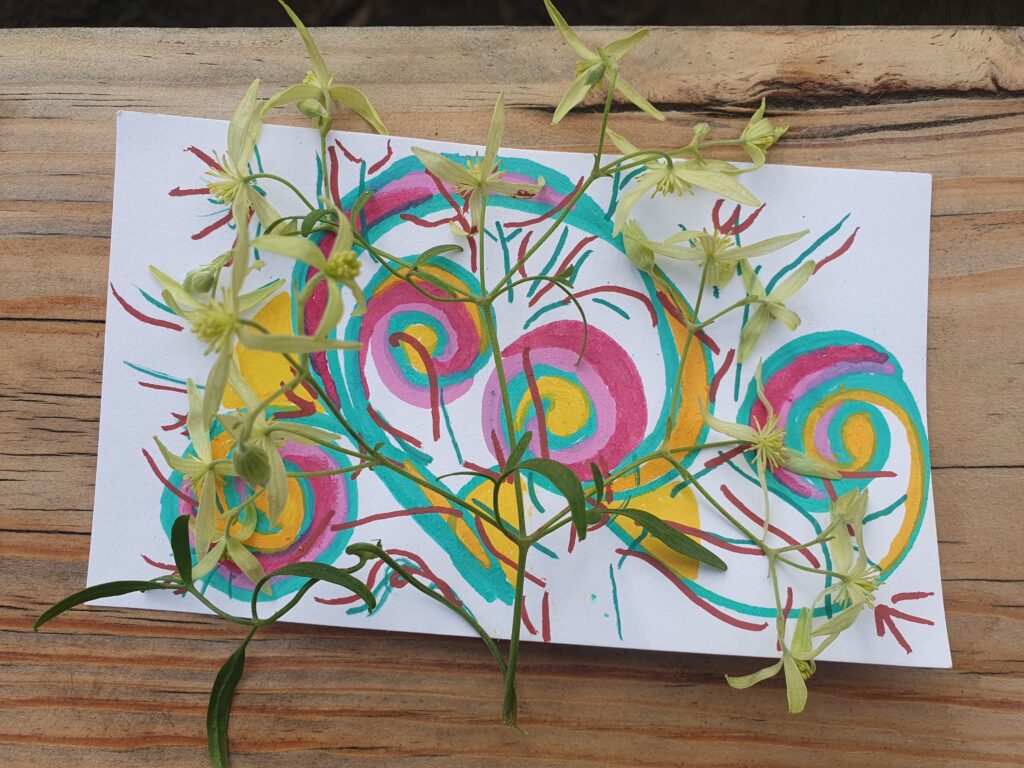
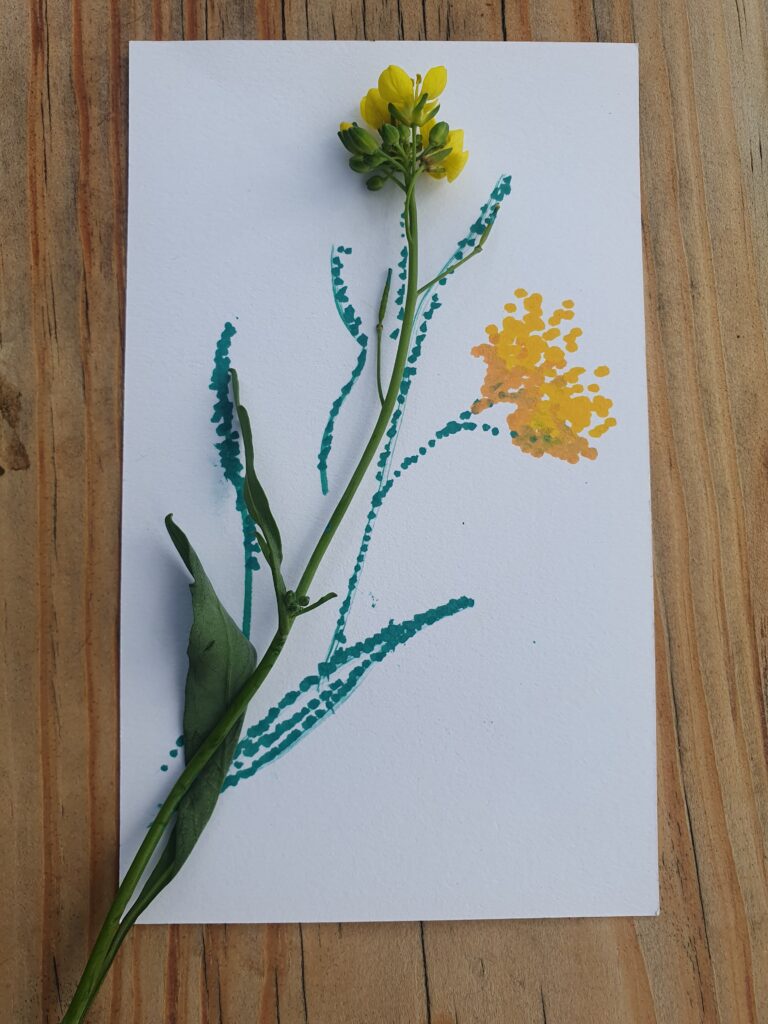
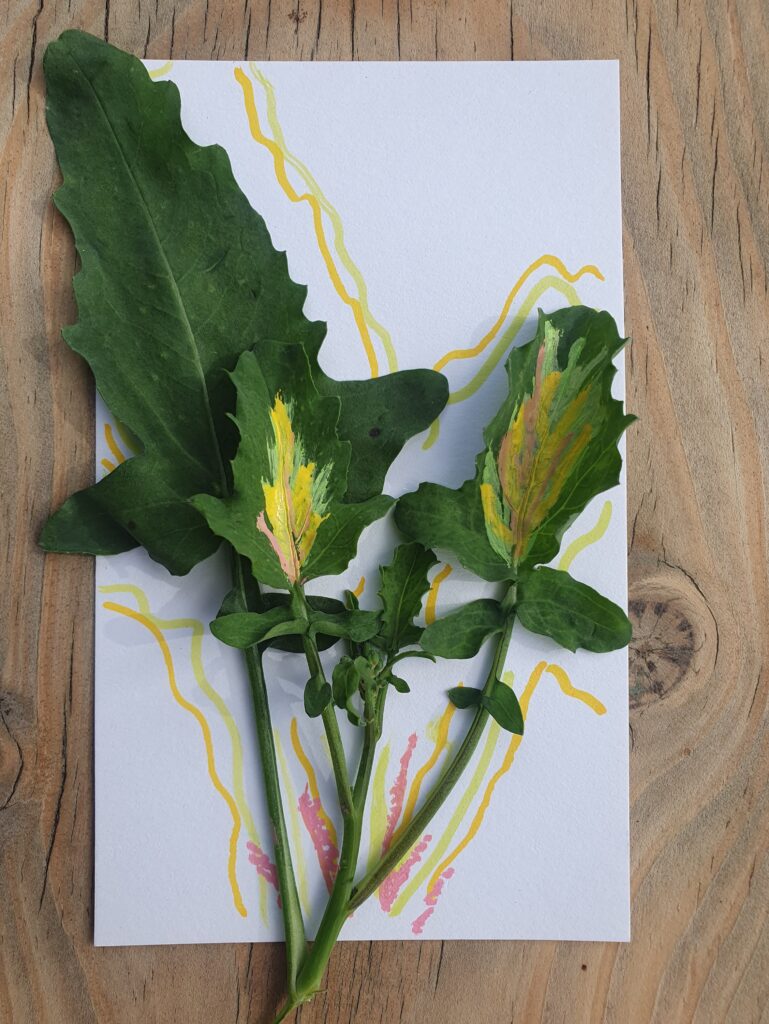
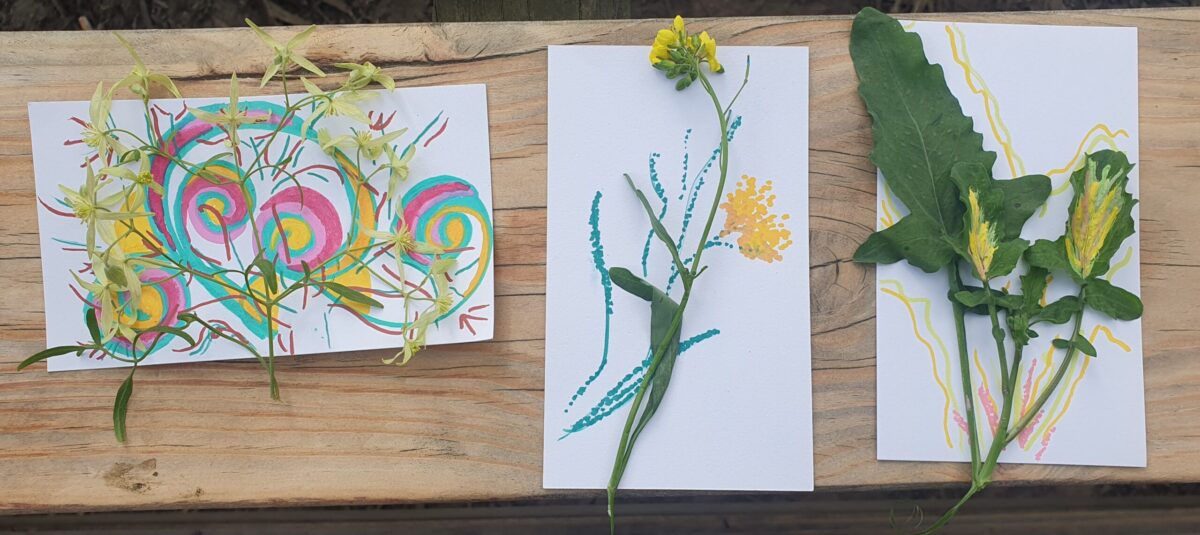
Source: artistic collaboration between riverside flowers, acrylics and relational time