
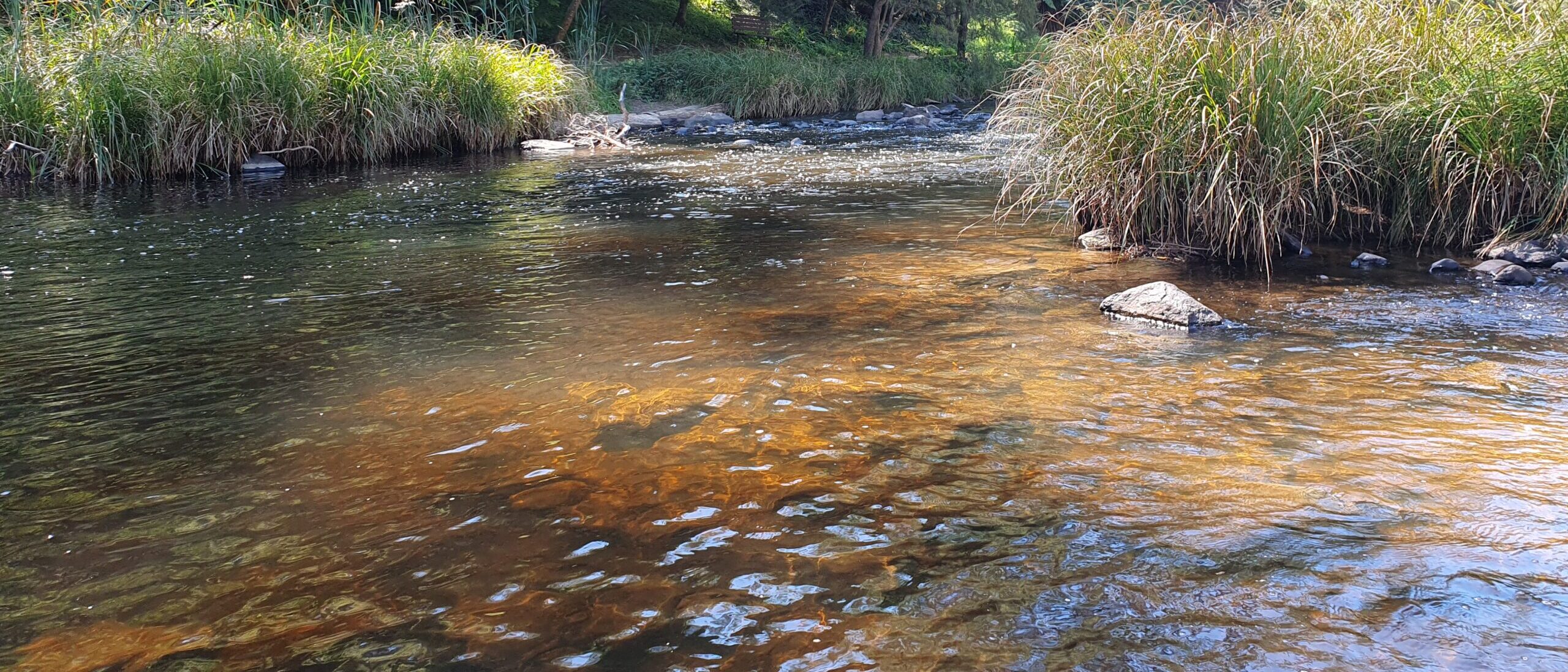
Water chemistry
At times, the scientist and artist parts of me collide into a strange poetic chemistry. When that happens, an unorthodox metaphor tends to pop into my head which the inner-critic mostly disregards. But, if the metaphor knocks on my mind-door again, and if I am in a state to open the door, I get to discover a bit of magic unfold. Let’s see what this one sparks…
What might water chemistry teach us about trans-disciplinary collaborations and orchestration of phase transformations? What might need to change in the system conditions to move more like water?
A stubborn metaphor
The first time the idea showed up was when I read the Good Shift article on collective governance in and for complexity, with a focus on the role of intermediaries, back in mid-2024. I have no idea whether the graphic designer was intentionally alluding to chemistry and entropy in their representation, but I certainly couldn’t not see it. What really surprised me then was that others who’d read the paper had not make that connection – which says much to the diverse perspectives and backgrounds we all sub-consciously bring to a conversation.

Entropy is broadly speaking the degree of disorder or uncertainty in a system. Represented by the letter S, entropy is the thermodynamic function that describes the randomness and disorder of molecules, where S is higher in a gas state, than a liquid state, than a solid state.

Can you now see how the Good Shift representation looked like an intermediary is changing the conditions in the system towards lower entropy: a more organised state?
The second time the metaphor sprung up on me was a year later (this week, mid-2025), after hearing someone launching an initiative say that setting up the collaboration was ‘fun, mostly’. After the giggle it triggered in me, it did send me into an introspective mode pondering why certain collaborations can be ‘fun, mostly’. My experience is that collaborations are hard and demand certain conditions to flourish (or even just to survive). Resources such as time, money, energy, capacity, relationships are certainly factors influencing the system conditions.
So, what does collaboration have to do with water chemistry?
Centring water
Why? Well, our body is roughly made of 70% water and the Earth we live on is also roughly covered by water at 70%. So, surely we can learn from observing water, reflecting on our relationship with water, and water states will likely teach us something.
Pressure and Temperature are key external factors influencing phase transition, in short:
- Higher Pressure leads to order and crystallisation;
- Higher Temperature creates more movement, disorder, and collision of molecules.
When orchestrating collaborations, there’s a certain chemistry (yes, pun intended) that needs to operate for them to succeed and it is sometimes tricky to know the amount of pressure needed or the right temperature, at a given time. These are not ‘set and forget’ types of parameters, rather need adjusting depending on what the situation demands.
If we take the water cycle and water phase transitions as an example of systems change and lower entropy towards a more organised state:
- Ice represents structure, high pressure, low temperature,
- Water vapour represents freedom, low pressure, high temperature,
- Liquid water becomes something in between… the structure that enables free flow with the adequate set of conditions…
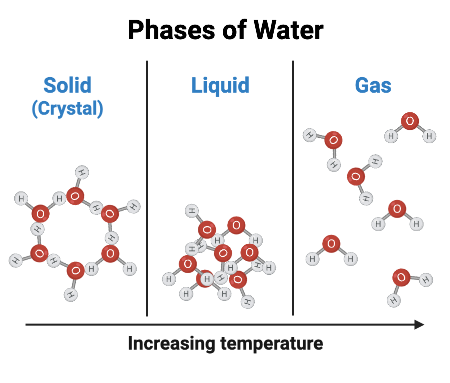
This is what the metaphor wanted to share: aspire to move like water.
There’s a flexibility that’s required in the way we view a situation, depending on what phase transformation we are seeking and what the situation needs.
Better understanding where the energy is coming from, knowing when to add a catalyst to lower the activation energy – that is the amount of energy required to initiate a chemical reaction – or when to let the reaction follow its natural course; all constitute potential collaboration pathways leading to alternate future states.
Since we are mostly water, what might we learn by centring the ways water moves in how we think through challenges and our responses to them?
The metaphor flows on…